.
Hi, I'm Kourtney
.
i'm a software engineer based in nyc 🐀🍕i studied computer science and computer engineering at usc ✌️, then worked on iOS developer infrastructure at metalately, i've been building 💻 and thinking about community software, agents, and the parts of the internet where people are trying to find each other, coordinate, and build identitybefore meta, i rebuilt Instagram's share extension📱 feature so anytime you upload a strava run, share your spotify wrapped or post a screenshot that should have stayed in the drafts, that's my code you're running ;)outside of software, i cook, paint and think a lot about culture
.
.
.
.
✈️ 🌎
i'm in my carmen sandiego era. here are a few notes from places that have shaped how i think about infrastructure, cities, culture, and daily life.
nigeria 🇳🇬
a fun throwback to my childhood, and a reminder that infrastructure is not abstract. power, logistics, payments, and trust shape what people can build and how much effort ordinary life requires.
[ pics ]
kenya 🇰🇪
brings me peace. it made me think a lot about what good urban rhythm feels like: movement, warmth, density, and enough structure for people to build around.
s. korea 🇰🇷
made me rethink default assumptions about cities, food, cleanliness, transit, and shared space. also, the chicken is unfairly good.
uae 🇦🇪
feels like wakanda built in the desert. it made me think about safety, ambition, state capacity, and what happens when a place decides to build quickly and visibly.
mexico 🇲🇽
home of some of the happiest and healthiest elders i have ever met. cdmx is unmatched: dense, social, beautiful, and alive in a way that makes most cities feel under-designed.
💻🧋
.
some cool communities
pear ffc - a community of technical women founders. one of the rare spaces that feels both ambitious and genuinely warm
envision - cool people building cool things. a good reminder that taste compounds when you spend time around people with high agency
treehousenyc - female founders in nyc. thoughtful, generous, and very new york in the best way
athenahacks team - the largest hackathon for women in southern california. i helped organize it while at usc, and it remains one of my favorite examples of community as infrastructure
ritualswhat: rituals is a community product i designed and shipped after meta. i started with a simple belief: creators needed better tools for bringing people together around shared goals, not just broadcasting to followers or pushing people into another group chat.why: building with creators helped me see a deeper gap. today’s platforms are good at distribution, and tools like discord are good at containment, but very few products help communities develop memory, presence, matching, and self-organization.one creator i worked with went from 20k to 100k followers in a weekend. thousands of people were in her comments asking when they could start their season together. she improvised a discord with themed days and moderators, but the structure fell apart. the interesting part was that members self-organized anyway. moms found moms, age groups clustered, and people with shared goals formed their own threads.that became the seed of what i’m exploring now: community software that understands social context well enough to help people coordinate beyond loose ties.[link]
podcashwhat: podcash was a marketplace for funding non-venture-scale businesses through fixed-term loans with negotiable rates. small businesses could apply for a revolving line of deal credit, allowing them to access new loans as existing deals were repaid.why: venture capital is a poor fit for many good businesses. we were interested in financing models for companies that could be profitable, durable, and valuable without needing to become venture-scale.post-mortem: i still think this market is important, but my cofounder and i realized we were not the right people to build it.[photos]
.
coveowhat: coveo was a mobile-first video collaboration productwhy: we believe video collaboration should exist natively inside video-based social products. content creation is still largely treated as a one-person operation. we can collaborate in google docs, figma, notion, and code editors, but making video with other people is still awkward, fragmented, and overly dependent on editing tools after the factpost-mortem: i still think collaborative creation is an important behavior, but coveo felt more like a feature than a standalone platform. the better version probably belongs inside a larger social or creator product where people are already making, remixing, and distributing video[photos]
oziwhat: i contributed to descent, an open-source protocol for issuing dollar-backed currency notes for frontier market fiat currencies. ozi was a decentralized oracle for descent, responsible for feeding real-world currency conversion rates to the protocol so it could maintain a 1:1 peg to frontier market fiat valueswhy: the broader thesis was that open digital financial services can be catalysts for economic independence: the freedom for individuals to earn, own, and control their money outside fragile local systemswhat I learned: this project pulled me deeper into questions about trust, financial infrastructure, and the difficulty of connecting messy real-world data to programmable systems. the technical problem was interesting, but the more important question was social: what does it take for people to trust new financial rails?
dropperwhat: dropper was an API layer for e-commerce logistics, focused on aggregating independent last-mile delivery providers in frontier marketswhy: Logistics is hard. it is one of those invisible systems that determines what kinds of businesses can exist. in markets with fragmented delivery networks, small merchants often have to stitch together unreliable providers manually. we wanted to make that coordination programmablepost-mortem: the problem was real, but our model was not good enough. we underestimated the operational complexity, liability, and trust required to unify independent providers. i also learned how important founder-market fit is. being interested in a problem is not the same thing as being the right person to build the company[photos]
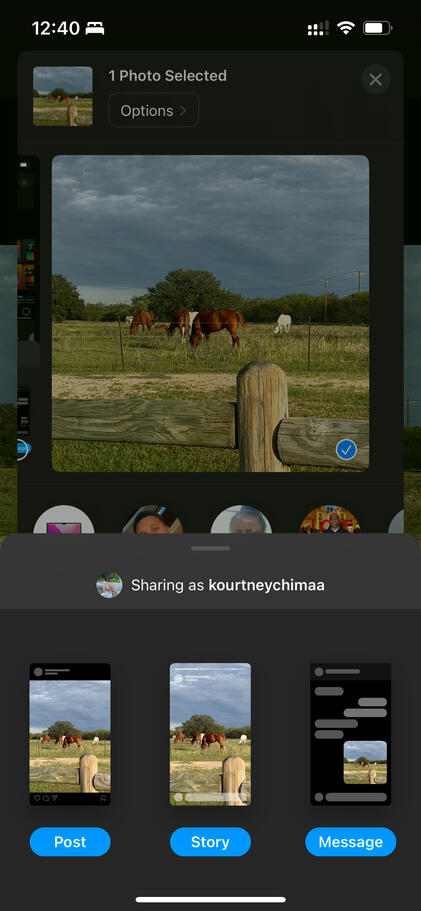
instagram share extensionthis was technically a job, but it remains one of my favorite projects.what: the instagram share extension for iOS lets people share content from other apps directly into instagram stories. in fall 2019, i rebuilt the extension as an intern on the IG Mobile Foundation team, rewriting it from objective-c to swift. it was my first serious mobile project. i had 12 weeks to ramp up on iOS, navigate meta’s internal tooling, and ship a working extension. for a small app, a share extension might be straightforward. for instagram, it took more than 120 diffs. by the end of my internship, my code had already run millions of times. today, the extension is rolled out at full scale on billions of users' devices.why: the project became an early test case for swift support in meta’s iOS developer tooling. at the time, many internal tools did not fully support swift, so the rewrite exposed gaps around debugging, swift/c++ interoperability, missing symbols, and build tooling. when i later joined meta full-time, i joined the iOS devx team responsible for making swift support better for thousands of iOS engineers.what stayed with me: the engineering story is only half of why i still think about this project. watching myself and my friends use this thing I had built, I quickly realized the share extension turned private product activity into public identity. Spotify wraps, strava sessions, memes, screenshots, status signals, subculture references: all of these became things people could carry into their existing social graphs via instagram stories. small pieces of infrastructure can change how behavior travels across the internet. a good sharing surface does not just move content from one app to another. it gives people a way to say, “this is who i am”